

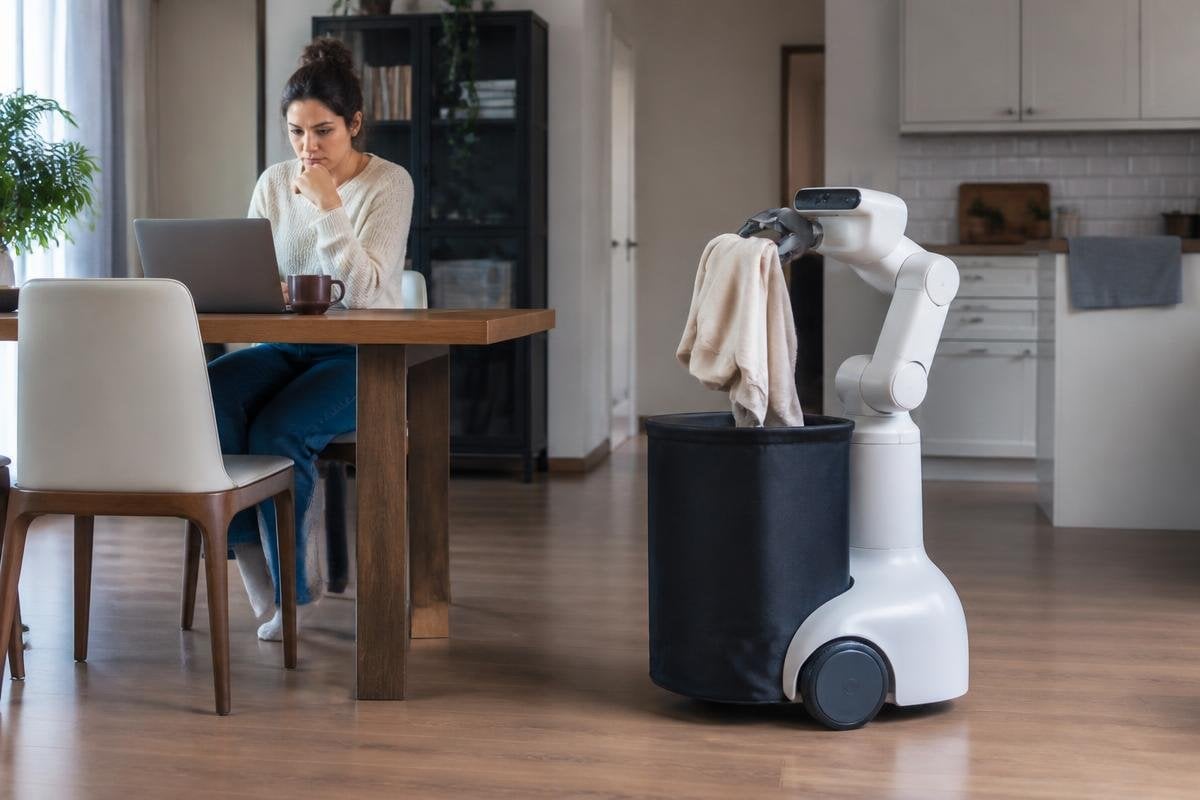
A personal robot will enter your home with one question attached: what work can it do without constant help? The answer matters more than its height, voice, or face.
Quick read
- Buy around a task, such as carrying items, cleaning, or checking a room.
- A useful robot must work safely when people, pets, doors, and loose objects interrupt it.
- Ask for proof of the task, the price, the service plan, and the limits before you buy.
Start with the job
Personal robotics covers many machines, so the label tells you very little. A robot that carries a basket needs different motors, sensors, and safety controls from one that cuts grass or checks an older person’s home.
That difference changes the buying decision. A clear task gives you a way to judge the robot: how much can it carry, how long can it run, what surfaces can it cross, and how often must a person take control?
A broad promise such as “helps around the home” is hard to test. A narrow promise such as “moves laundry from one room to another” gives you a list of conditions to check.
The robot needs to find the basket, hold it without dropping clothes, avoid people, and return to charge.
The home is the hard part
A factory can limit floor surfaces, lighting, object sizes, and human movement. A home cannot count on those conditions. Rugs curl, chairs move, pets cross the robot’s path, and a full basket weighs more than an empty one.
This is where sensors and control software matter. Cameras can identify objects, LiDAR can measure distance, and force sensors can show when a gripper meets resistance. Those parts help the robot react, but they don’t prove that the whole task works without help.
The test should include the ordinary failures. A door may be partly closed. An object may sit outside its usual place. The robot may lose its wireless connection or need a person to move something from its path.
A personal robot’s price can extend past the machine through software fees and replacement parts. Personal robotics reporting from Robot24.com can put those costs beside the maker’s claims before the next section looks at the full bill.
The price includes more than the robot
The purchase price is only one number to ask for. A personal robot may also need a charging station, software access, repairs, replacement parts, or a service visit when its sensors fail.
Ask how the robot handles data inside the home. A camera that sees rooms, faces, or documents creates a separate cost in privacy. Find out where recordings go, how long the company keeps them, and what still works if the network is down.
Remote control deserves the same check. Teleoperation means a person guides the robot from another location. That may help during a difficult task, but it changes the product from an independent worker into a machine that needs staff time.
I’d buy a personal robot only after watching the full task run without a carefully arranged room.
What has to be proven
A short demonstration can show that a robot completed one action once. It doesn’t show how often the action works, how long setup takes, or what happens after failure.
A useful product page should state the robot’s payload, battery runtime, speed, reach, noise level, and operating limits. If a figure is missing, treat that gap as a question rather than filling it with a guess.
The company should also show the handoff between tasks. Picking up an object is one action. Finding the next object, carrying it through a doorway, placing it correctly, and recovering from an error is the work that determines value.
A practical buying check
Use this list before a home robot reaches your floor:
- Name the task: write the exact job and the result you expect.
- Measure the setting: record door widths, floor types, stairs, lighting, and the space around furniture.
- Check human control: ask how often a person must guide or reset the robot.
- Price the full service: include charging hardware, software fees, repairs, parts, and support.
- Test failure cases: ask to see a blocked path, a dropped object, a lost connection, and a low battery.
- Set a stop rule: decide what failure rate or repair cost means you return it.
That last point keeps the purchase tied to work you can measure. Personal robots may become useful in homes, but the next step depends on repeated task results, clear running costs, and fewer moments that need a human rescue.
